


Because dishonesty in horse sales is far too common, Stolen Horse International understands why past owners may become deeply concerned when communication breaks down after a sale. We respect and support those who simply want reassurance that the horses they once cared for are safe and well‑treated. Our role is to provide a neutral platform that allows concerned individuals to locate a horse’s whereabouts, always keeping the horse's welfare as our highest priority.
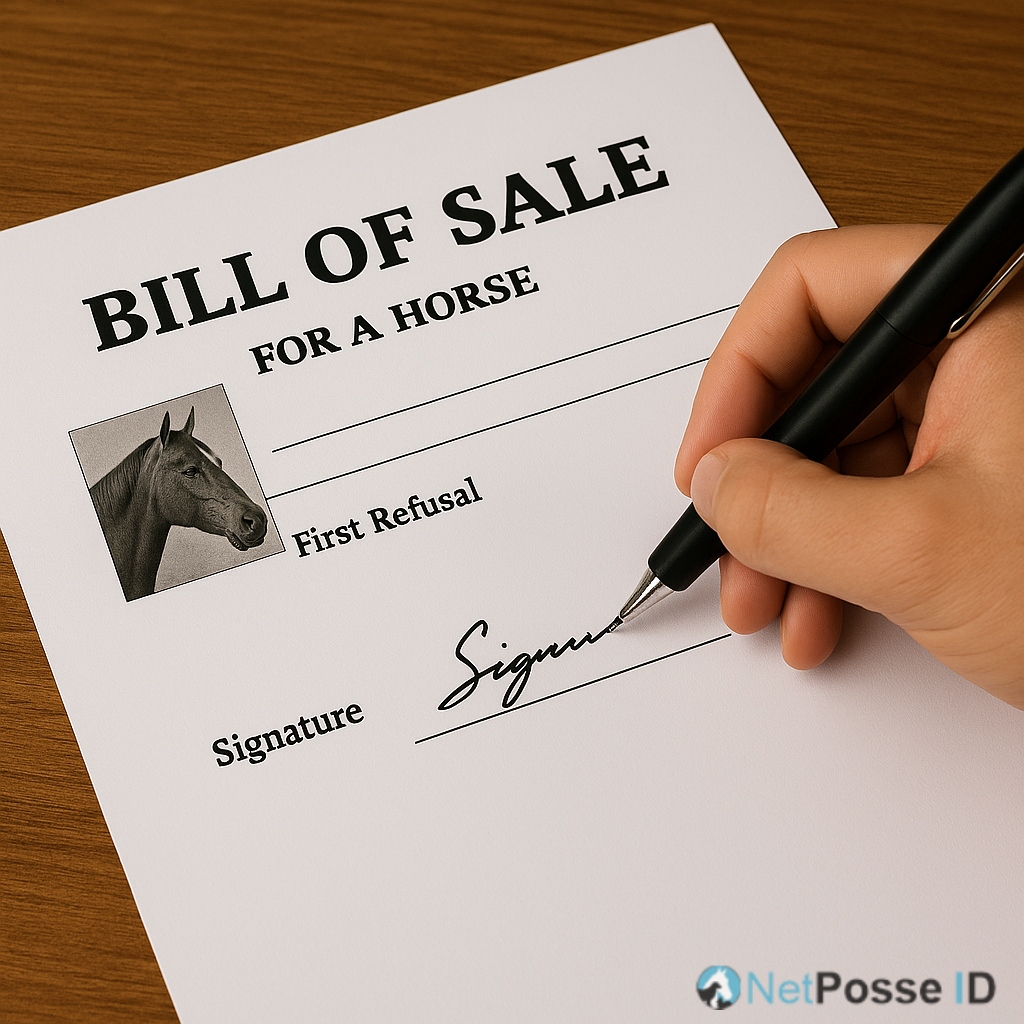
With that said, there are several common reasons why a buyer might sign a right of first refusal (ROFR) in a horse bill of sale even if they have no intention of honoring it—but none of them are very good or ethical. Here’s a clear, practical breakdown of how and why this happens, drawn from typical patterns seen in the horse world:
1. They view it as a “non‑enforceable” clause
ROFR clauses in horse sales are often considered difficult to enforce because:
- Horses are legally classified as personal property.
- Once the horse changes hands, the original seller usually has no ownership interest to enforce.
- Many ROFR clauses are written vaguely (no timeline, no price terms, no method of contact, etc.).
- Enforcing them often requires going to civil court, which is expensive and rarely worth it.
Because of this, some buyers sign thinking:
“This won’t hold up anyway, so it doesn’t matter.”
This is, unfortunately, extremely common.
2. They signed to avoid conflict or to “get the deal done”
Sometimes a buyer really wants the horse but:
- The seller insists on including the clause.
- The buyer doesn’t want to argue.
- They believe refusing to sign might jeopardize the sale.
So they sign simply to move forward—even if they don’t plan to follow it later.
3. They didn’t read or understand the clause
A surprising number of buyers:
- Sign quickly,
- Are unfamiliar with legal terminology,
- Don’t understand the obligations created by a ROFR.
They might not even realize they agreed to it until confronted later.
4. They assume circumstances may change
Buyers sometimes believe:
- They will never sell the horse,
- So agreeing to a ROFR feels irrelevant at the time,
- But later circumstances (money, injury, life changes, trainer influence, etc.) make them change course.
At that point, they may ignore the ROFR simply due to convenience or pressure.
5. They believe the clause is only “moral,” not binding
In some horse communities, a ROFR is seen more as a gesture of goodwill, not a legal obligation. Buyers might believe:
“It’s more of a courtesy than a real rule.”
So they sign to show respect at the time, then don’t follow through later.
6. They want control over the horse’s future without interference
Some buyers don’t like the idea of the previous owner having any say in:
- Who the horse goes to,
- When it is sold,
- Or for how much.
But rather than negotiate to remove it, they simply sign and ignore it.
7. They had a hidden motive or agenda
In rarer cases:
- Buyers intend to flip the horse,
- Or send it to auction,
- Or sell it quickly for profit,
And they know a ROFR would interfere. They agree anyway to keep the seller from questioning the sale.
Important Note (but not legal advice):
A ROFR can be enforceable if:
- It includes clear terms (price, deadlines, method of notice),
- Both parties signed,
- It meets contract standards of your state.
But enforcing it requires court action, which is why many buyers gamble on the seller not pursuing it.
Do I want a legal victory, or do I want my horse back?
Because in ROFR situations, these two goals almost never overlap.
If your main goal is getting the horse back, your energy is better spent:
- Tracking the horse’s current location
- Politely contacting the new owner
- Offering to buy the horse at fair market value
- Staying visible and available if the new owner ever wants to sell
If your main goal is to hold someone accountable, you may pursue a breach-of-contract claim, but damages will likely be minimal or zero.
Stolen Horse International often receives reports involving Right of First Refusal concerns, but we do not take sides in these disputes. Our role is simply to support a person’s right to search for and check on the well‑being of a horse when communication has broken down.
All horse owners entering into sales agreements should understand that some buyers sign Right of First Refusal (ROFR) clauses with no real intention of honoring them. In a number of cases submitted to our Searching for Horse or Missing Horse reports, the horse is resold without notice and may even vanish into the deeply troubling slaughter‑pipeline system. If a seller chooses to include a ROFR clause in a sales contract, we strongly recommend having an attorney draft the agreement with clear, strong language that may offer better protection if the situation ever becomes a legal matter.
This article was written with assistance from AI. Always consult a qualified professional for legal or contractual advice.
Stolen Horse International provides news and other resources for free on this website. As a charitable organization we survive on the kindness of people like you. Please consider donating to help fund the organization or purchasing a NetPosse ID for your horse, dog or cat to help protect your beloved animals!
Debi Metcalfe
Please login to post a comment.
Related Articles






Comments