


When a Lost Horse Isn't Yours Anymore: Understanding U.S. Estray Laws and Reclaiming Requirements
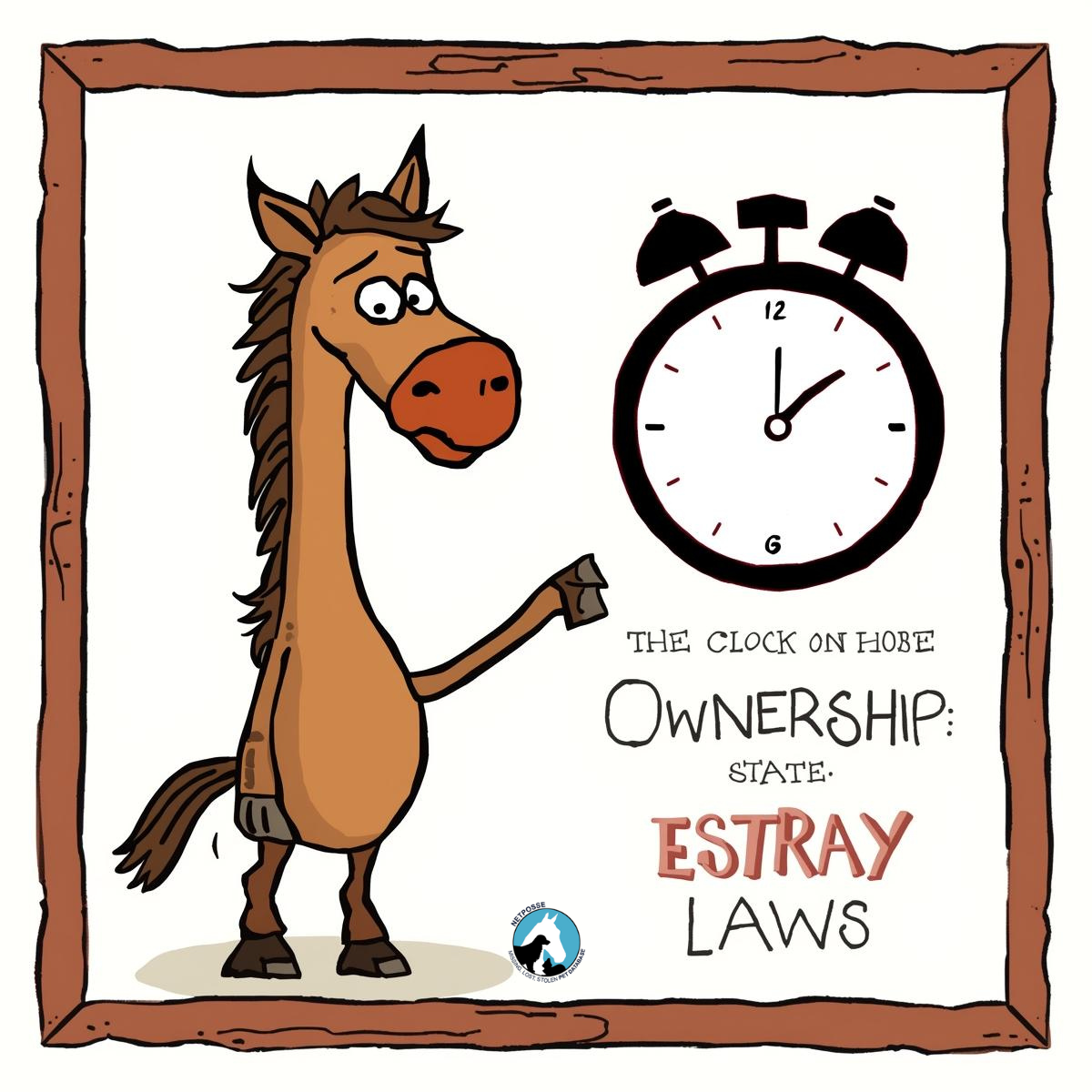
Across the United States, regulations regarding "estray" livestock (stray domesticated animals) vary significantly by state. Many jurisdictions follow a process where local law enforcement or animal control takes custody, and if the animal remains unclaimed within a short statutory period (often just a few days to a couple of weeks), ownership is transferred. The animal may then be sold to cover impoundment and care costs.
To reclaim an estray horse, owners must typically act quickly and adhere to specific requirements:
- Provide Proof Of Ownership: Owners must present satisfactory evidence, such as brand registrations, veterinary records, or a purchase document, to prove ownership.
- Pay All Associated Fees: The owner is responsible for covering costs related to impoundment, daily boarding, feed, veterinary care, and any required legal notice publications.
- Pay Fines (If Applicable): The owner may also face fines for violations of local "at large" or leash laws.
State-Specific Examples
- Florida: If livestock is unclaimed after just three days, local authorities, such as the Hendry County Sheriff's Office, may legally take ownership and pursue further action.
North Carolina: The legal timeframe for an owner to reclaim a lost or estray horse is ten days. If the owner does not come forward within this period, the horse becomes the property of the finder or the county, potentially leading to a public auction. - South Carolina: South Carolina also has a short three-day unclaimed period before the process for public sale begins.
- Kentucky: Counties must retain estrays for a minimum of 15 days.
- Minnesota: In stark contrast, Minnesota law allows the owner to reclaim the animal up to 1 year after a notice is filed with the town clerk.
Additional Legal Considerations
- Liability: In many states, the original owner of an estray animal remains liable for any damages the animal causes to individuals or private property while at large.
- Open vs. Closed Range Laws: These laws influence fencing requirements. In closed-range areas, livestock owners must fence animals in. In open-range areas (more common in some western counties), property owners are generally responsible for fencing their animals out. However, estray laws requiring the reporting of stray animals generally apply regardless of range status.
These laws are designed to ensure the humane care of animals and to resolve ownership issues efficiently when owners cannot be located.
Stolen Horse International provides news and other resources for free on this website. As a charitable organization we survive on the kindness of people like you. Please consider donating to help fund the organization or purchasing a NetPosse ID for your horse, dog or cat to help protect your beloved animals!
Debi Metcalfe
Please login to post a comment.
Related Articles






Comments