


Why “Thieves Will Remove the Microchip” Is Largely a Myth
For more than 28 years, Stolen Horse International has been a leader in offering microchip kits directly to the public and advocating for microchipping as one important layer of permanent identification—alongside visible ID such as brands, tattoos, or markings.
We often hear concerns from owners who hesitate to microchip because they believe a thief could simply “take it out.” In reality, removing a microchip from a horse is far from simple and is extremely unlikely to be accomplished by a lay person.
Here’s why:
1. The exact location isn’t visible.
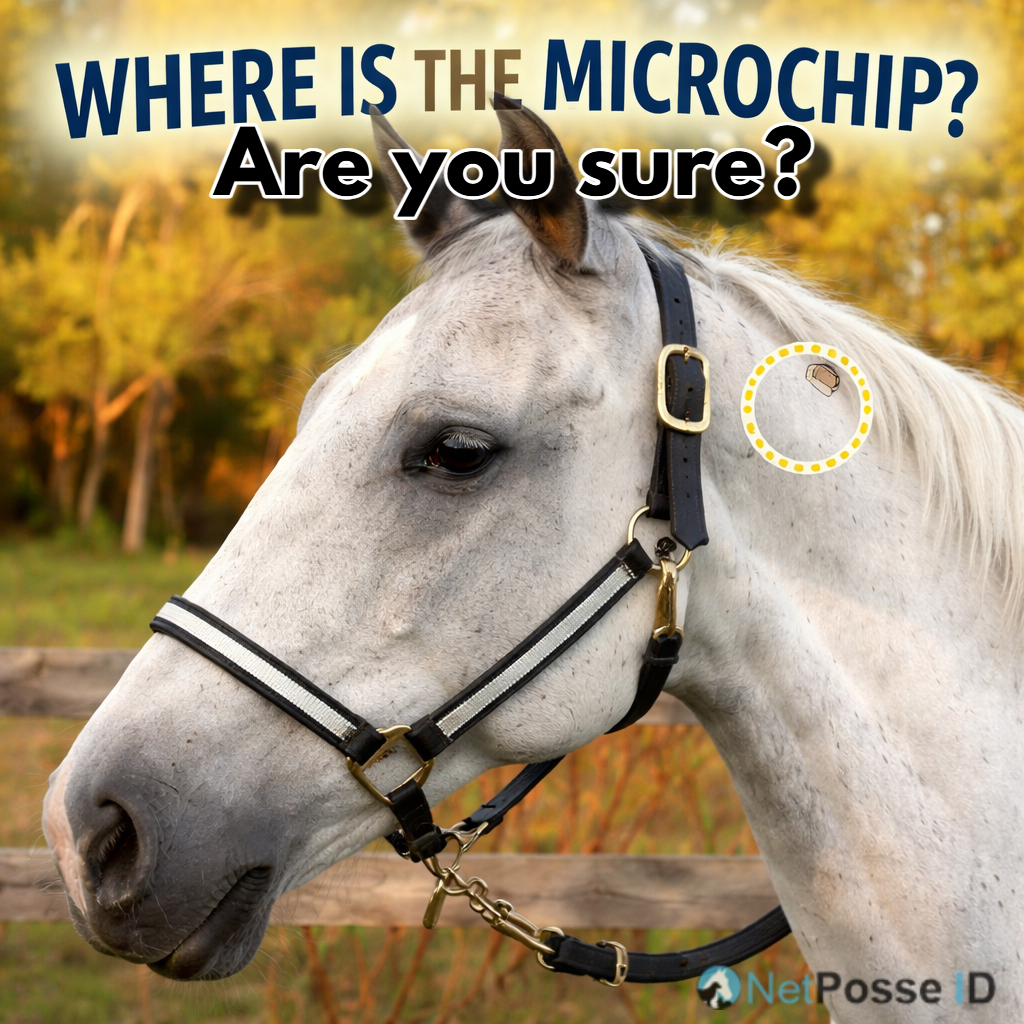
Microchips are tiny and sit beneath the skin, typically in the nuchal ligament area of the neck. You cannot see or feel a chip from the outside. The only reliable way to locate one is with a microchip scanner, and even then the scanner provides a general area—not a precise surgical target.
2. Chips are designed to stay in place when properly implanted.
When microchips are implanted correctly in a horse—into the nuchal ligament using proper technique—they do not migrate or move. The ligament helps anchor the chip in place long-term.
In some cases, microchips have been mistakenly placed just under the skin, similar to how they are implanted in small domestic animals. This improper placement can allow a chip to shift slightly or, in rare situations, work its way out.
Unlike dogs or cats, horses receive microchips using a different insertion method specifically intended to prevent movement. When placed correctly, equine microchips remain stable, making blind removal attempts even more unrealistic.
3. Specialized equipment is required.
True localization often requires veterinary-level tools and sometimes imaging (such as ultrasound) to pinpoint the chip’s exact position beneath tissue layers.
4. Removal is a minor surgical procedure.
Extracting a chip involves making an incision, carefully dissecting tissue, locating the chip, removing it, and closing the site—ideally under sterile conditions. This is not a quick or simple task and carries risks of bleeding, infection, and noticeable scarring.
5. It leaves evidence.
Any attempt to remove a microchip would likely leave a wound, scar, or signs of recent surgery—valuable clues during an investigation.
6. Most thieves won’t bother.
Horse thieves tend to look for easy opportunities. The time, skill, and risk involved in attempting microchip removal make it impractical, especially when many thieves already assume horses are unlikely to be microchipped.
The Bottom Line
Microchips are not a perfect solution—no single form of ID is. But they are a powerful, permanent layer of protection that dramatically increases the chances of proving ownership and reuniting horses with their rightful owners. When combined with visible ID and proper registration, microchipping remains one of the strongest tools available in horse theft prevention and recovery.
Layered identification saves horses. Microchips are a vital part of that safety net.
Stolen Horse International provides news and other resources for free on this website. As a charitable organization we survive on the kindness of people like you. Please consider donating to help fund the organization or purchasing a NetPosse ID for your horse, dog or cat to help protect your beloved animals!
Debi Metcalfe
Please login to post a comment.
Related Articles



.png&width=457&crop=2)













Comments