
During times of economic instability, natural disasters, or personal change, horse owners often encounter more operational difficulties. Ensuring the safety and well-being of your livestock requires a disciplined risk-management approach. The following protocols aim to improve security by offering detailed strategies to prevent theft of horses and property, such as strengthening perimeter defenses and using surveillance to ensure ongoing care for your horses.
Safety Tips
- Microchip and Register Your Horse: A microchip is a permanent identification. Ensure your horse has a registered microchip and that the information associated with it is up to date. This dramatically increases the chances of recovery if your horse is lost or stolen.
- Brand Your Horse: Branding, whether by the hot or freeze method, is another form of permanent identification. Consider freeze branding or hot branding your horse. While it once was more common than microchipping, it provides a visible means of identification. Since many states are not ‘brand’ states that maintain more accurate records and enforce laws more effectively, branding is a great visual ID, but not the best for tracing back to an owner.
- Take Clear, Current Photos: Keep your horse's photos up to date and clear from all angles. Include unique markings and scars. These photos are vital for identification if your horse goes missing.
- Document Everything: Maintain detailed records, including bills of sale, registration papers, health records, and photos. The more documentation you have, the easier it will be to prove ownership.
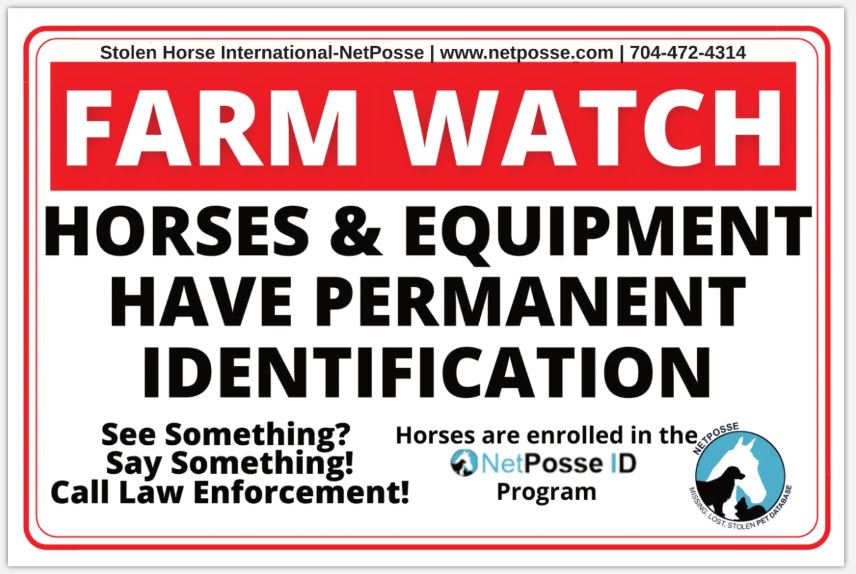
- Network with Other Horse Owners: Build a network of fellow horse owners in your area. Share information and keep an eye out for each other's horses. Inform your neighbors about any suspicious activity by participating in a "Farm Watch" community program. If such a program doesn’t exist, consider starting one. A strong community is a valuable asset.
- Secure Your Property:
- Ensure your gates are secure and fences are in good repair. Regular checks of fencing will help prevent escapes. Install high-quality, bolt-cutter-resistant padlocks and chains on all access points. Ensure gates cannot be lifted off their hinges by reversing the top hinge pin.
- Patrol the pastures every day. Check for new tire tracks, cut wires, trampled down grass, and any signs indicating someone may be watching your property.
- Optimal Layout: Whenever possible, locate barns and pastures away from main roads and behind your primary residence. Avoid feeding horses near road-facing gates, as this encourages them to congregate in areas that are easy to access.
- Consider installing security cameras or alarms, especially if you live in an area with a high risk of theft or natural disasters.
- Already have an alarm system? Remember to keep the control panel placed so that a thief cannot see if it is active. And if you have alarms, make sure to use them!
- Install motion sensor lights and motion-activated surveillance cameras. Utilize motion-activated spotlights to startle intruders. Modern 2025 security setups often integrate these with phone alerts to notify you of movement immediately.
- Post signs warning about both cameras and dogs. Thieves generally avoid areas with such warnings. Post visible "No Trespassing", "Under Surveillance", and "Farm Watch" signs to signal that the property is actively monitored.
- Use natural alarms and barriers such as donkeys, dogs, guinea hens, geese, peacocks, and thorny plants along your fence. Thieves tend to avoid noise, and these animals produce loud sounds to draw attention.
- Remove Halters: Never leave halters on pastured horses or hanging near stall doors. Removing these tools forces thieves to bring their own equipment, causing critical delays.
- Be Wary of Strangers: Be wary of strangers who show interest in your horse, especially if they want to sell horses. Verify their credentials and motives, and don’t hesitate to ask for ID. Maintain a record of everyone who visits your property, especially strangers. Additionally, take photos of strangers, their vehicle, and their license plates for safety.
- Don't Post Travel Plans Publicly: Avoid sharing your travel plans on social media, as it can alert thieves that your home is unoccupied. If you're on vacation, use automatic timers to switch on lights, TV, and music at different times to create the illusion of occupancy. Ensure your mail is collected or temporarily halted by either stopping delivery or having a neighbor pick it up. You might also consider hiring a house sitter to watch over your home.
- Maintain Insurance: Maintain adequate insurance coverage for your horse. This can help cover the costs associated with theft, injury, or illness.
- Have a Disaster Plan: Develop a comprehensive disaster plan that includes evacuation routes, emergency contacts, and a designated meeting place. Practice the plan regularly to ensure everyone knows what to do.
- Communicate with Your Veterinarian: Keep your veterinarian informed of any changes in your horse's health or behavior, and ensure the vet has a record of your horse's permanent identification. They can provide valuable advice and support during difficult times. A strong relationship with your vet is invaluable.
- Seek Help When Needed: Feel free to reach out to friends, family, or equine professionals for help. Report any suspicious activity, such as someone taking photos of your property or horses, to law enforcement. Numerous resources are available to assist horse owners in difficult situations. Additionally, register your horse with Stolen Horse International’s NetPosse ID registry, the only comprehensive all-equine ID and recordkeeping system to establish ownership and identify your horses.
Conclusion
Implementing these proactive measures substantially enhances equine security and welfare during periods of instability. Diligent oversight, comprehensive preparation, and active community engagement remain the fundamental pillars of equine protection. For further resources and assistance, please consult the Stolen Horse International official website.
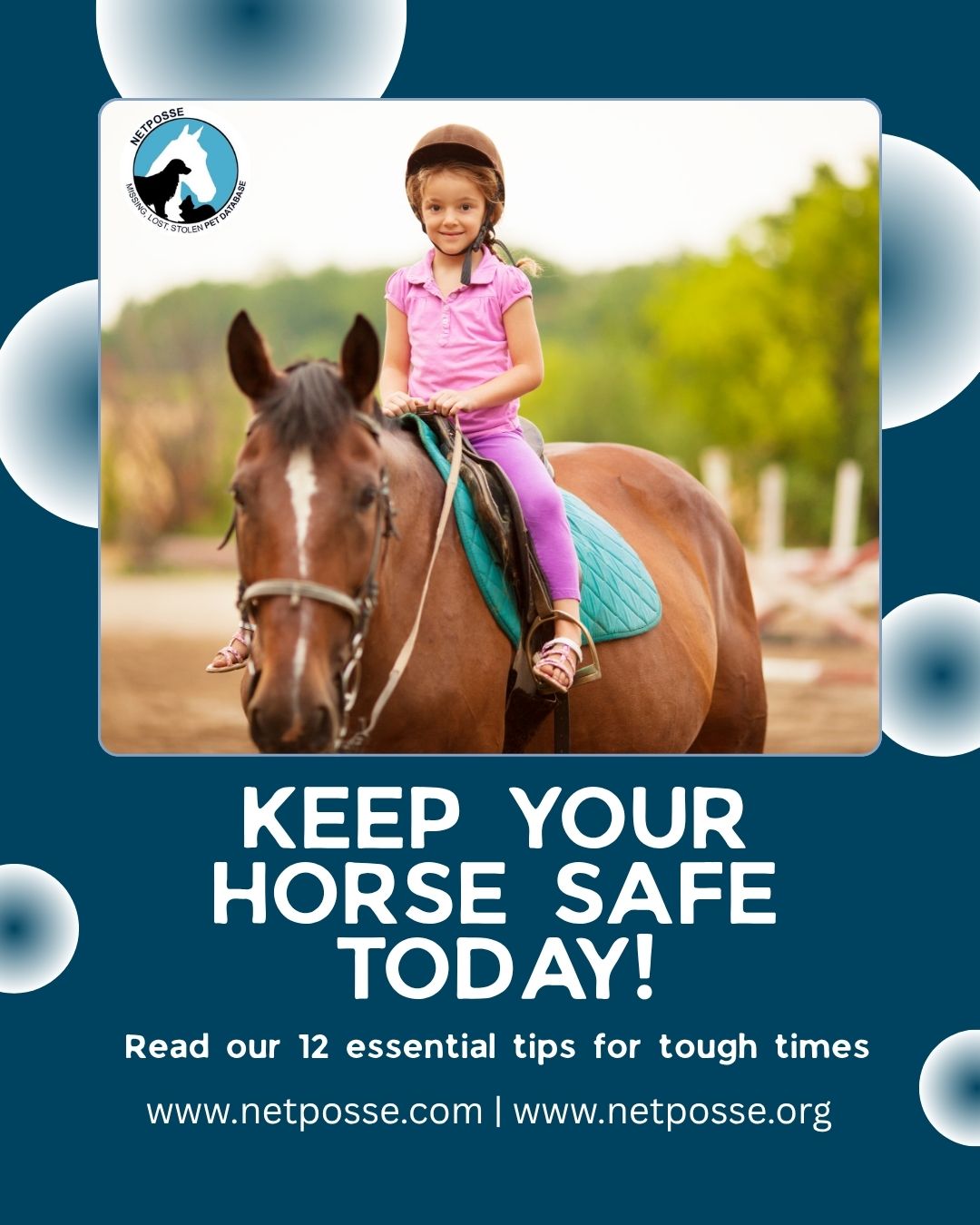
Visit our Stolen Horse International website for more tips and protection information at www.netposse.com or www.netposse.org
We encourage you to support our mission by disseminating NetPosse Alerts throughout your digital networks. You may follow our official updates and engage with our community on the following social media platforms:
Stolen Horse International provides news and other resources for free on this website. As a charitable organization we survive on the kindness of people like you. Please consider donating to help fund the organization or purchasing a NetPosse ID for your horse, dog or cat to help protect your beloved animals!
Debi Metcalfe
Please login to post a comment.
Related Articles





Comments