
Found Roaming Horses? Here’s What to Do — and What Not to Do
Finding horses where they don’t belong can be alarming. Most people want to help, reunite animals with their owners, or at least get them to safety. But good intentions don’t always align with livestock law—and acting without following the proper process can create serious legal problems.
That reality came into sharp focus after a recent incident in the San Luis Valley. John Ransom posted publicly after encountering loose livestock:
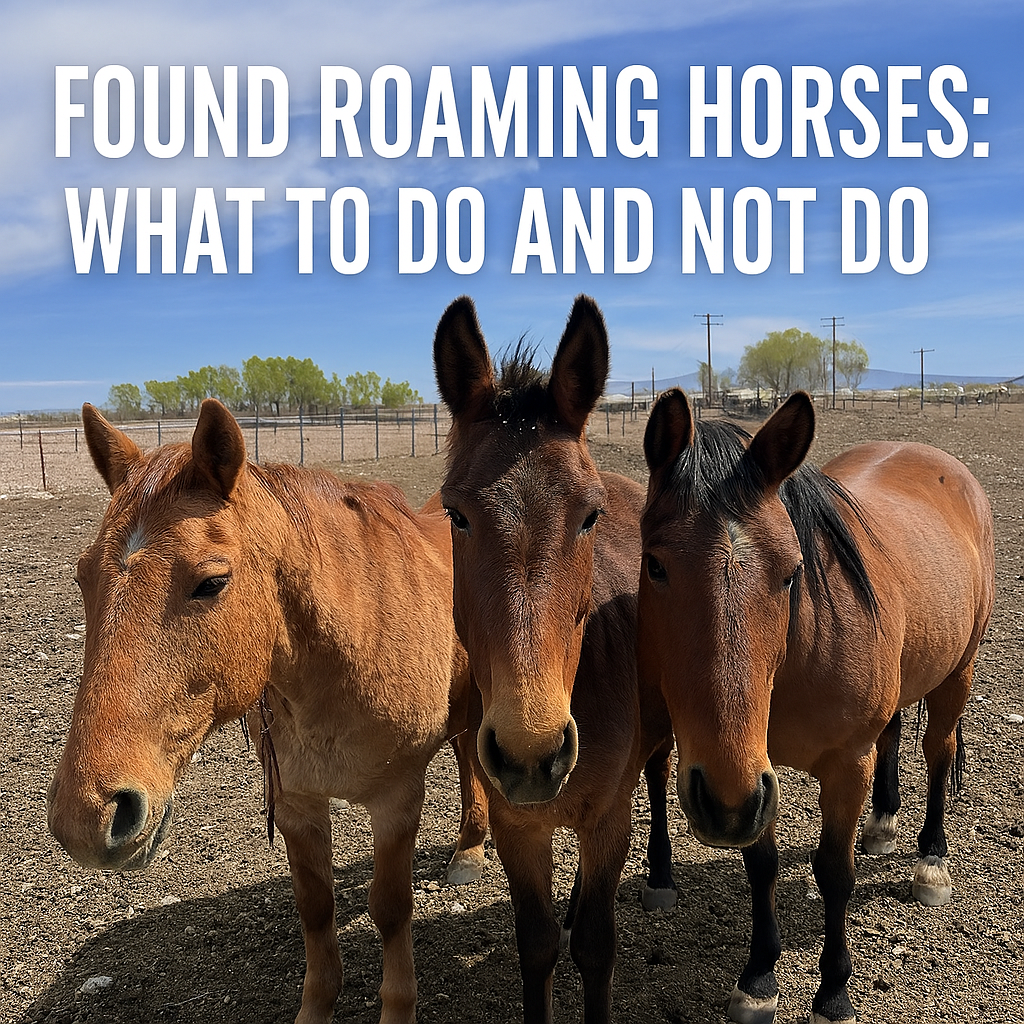
“Found in South Monte Vista area – 2 horses and a mule roaming free. They’re now in the sheep pens at 15/Gunbarrel and CR 11 S. One horse has an auction tag. Please retrieve them if they’re yours!”
From the outside, the situation looked straightforward: animals roaming free with no obvious owner. However, as livestock owner Lynda Carter later explained, the animals were not abandoned, neglected, or intentionally loose. They had escaped only shortly before—and what happened afterward highlights why following proper livestock protocol is critical.
Don’t Assume “Roaming” Means Abandoned
Horses and mules are powerful, agile, and unpredictable. Even well-maintained facilities can be breached quickly.
In this case:
- The animals were secure an hour earlier
- A mule jumped a 6‑foot fence
- The mule then tore down a section of an exterior gate
- Two mares followed through the damaged area
To someone encountering them later, the animals appeared to be roaming freely. In reality, this was a recent escape, not a case of animals being turned loose.
Key lesson:
You cannot determine ownership, intent, or legality based on appearance alone.
The First and Most Important Call: The Brand Inspector
When livestock are found, the correct authority to contact is the brand inspector (or the appropriate livestock authority in your state).
As soon as the animals were discovered missing, Lynda Carter called the brand inspector immediately, which is exactly what the law requires. Brand inspectors exist specifically to:
- Verify legal ownership
- Track missing or stolen livestock
- Prevent illegal sales or transfers
- Protect both owners and the public
Moving animals, penning them elsewhere, or taking them to a sale barn without brand inspection approval can derail recovery efforts and introduce criminal liability.
Fence‑Out Law Matters More Than Most People Realize
Colorado is a fence‑out state, meaning:
- Livestock owners are not automatically liable if animals escape
- Property owners are expected to fence animals out
- “Found” livestock does not become the finder’s responsibility to sell, buy, or rehome
This legal framework exists to reflect the realities of agricultural life. Even strong fencing can fail under the right conditions, and escape alone is not proof of wrongdoing.
Never Buy or Sell Livestock Without Inspection
One detail in the original post stood out to many people: “One horse has an auction tag.” That detail, however, became part of the problem rather than the solution.
According to the information later confirmed:
- The brand inspector notified the owner the animals were located at a sale barn
- The horses were sold improperly
- They were subsequently purchased in Wyoming
In Colorado and neighboring states, buying or selling livestock without a valid brand inspection can lead to criminal charges, regardless of intent.
- An auction tag is not proof of legal sale.
- A sale barn is not a substitute for inspection.
- And possession does not equal ownership.
What You Should Do If You Find Roaming Horses
If you encounter horses or other livestock that appear out of place, follow this process:
- Prioritize safety
Keep a distance. Avoid chasing or stressing the animals. Watch for traffic hazards. - Do not transport or sell the animals - Even temporarily or “just to help.”
- Contact the brand inspector or local livestock authority immediately - This protects everyone involved.
- Document what you observed -
- Number and type of animals, visible brands, markings, tags
- Time and location
- Visible brands, markings, or tags.
- Follow official instructions - Let authorities coordinate recovery and ownership verification.
Why Protocol Protects Everyone
Livestock laws are not red tape—they are safeguards.
Following proper procedure:
- Helps animals get home faster
- Prevents theft and illegal resale
- Protects finders from legal consequences
- Preserves trust in agricultural communities
As this situation demonstrates, bypassing the system—even with good intentions—can escalate a simple escape into a serious legal conflict.
Final Thought
Escaped horses are not stray pets. Livestock ownership is governed by long‑standing laws designed to prevent chaos, fraud, and harm.
When you find roaming horses, remember one rule above all others:
Call the brand inspector. First. Always.
It is the safest, lawful, and most responsible action—for the animals, their owners, and yourself.
Disclaimer:
This article was written and researched with the assistance of artificial intelligence tools and reviewed by a human editor for accuracy, clarity, and context.
Stolen Horse International provides news and other resources for free on this website. As a charitable organization we survive on the kindness of people like you. Please consider donating to help fund the organization or purchasing a NetPosse ID for your horse, dog or cat to help protect your beloved animals!
Debi Metcalfe
Please login to post a comment.
Related Articles
Comments