
How Does Someone Steal a Horse?
It is a question asked all the time at Stolen Horse International (NetPosse). People wonder how a 1,000-pound animal with a mind of its own can simply disappear. The answer surprises many: horse theft rarely looks like a scene from an old Western movie.
While strangers do occasionally cut fences and sneak into pastures at night, most missing-horse cases are far more complicated. Here is how it actually happens and how you can protect your animal.
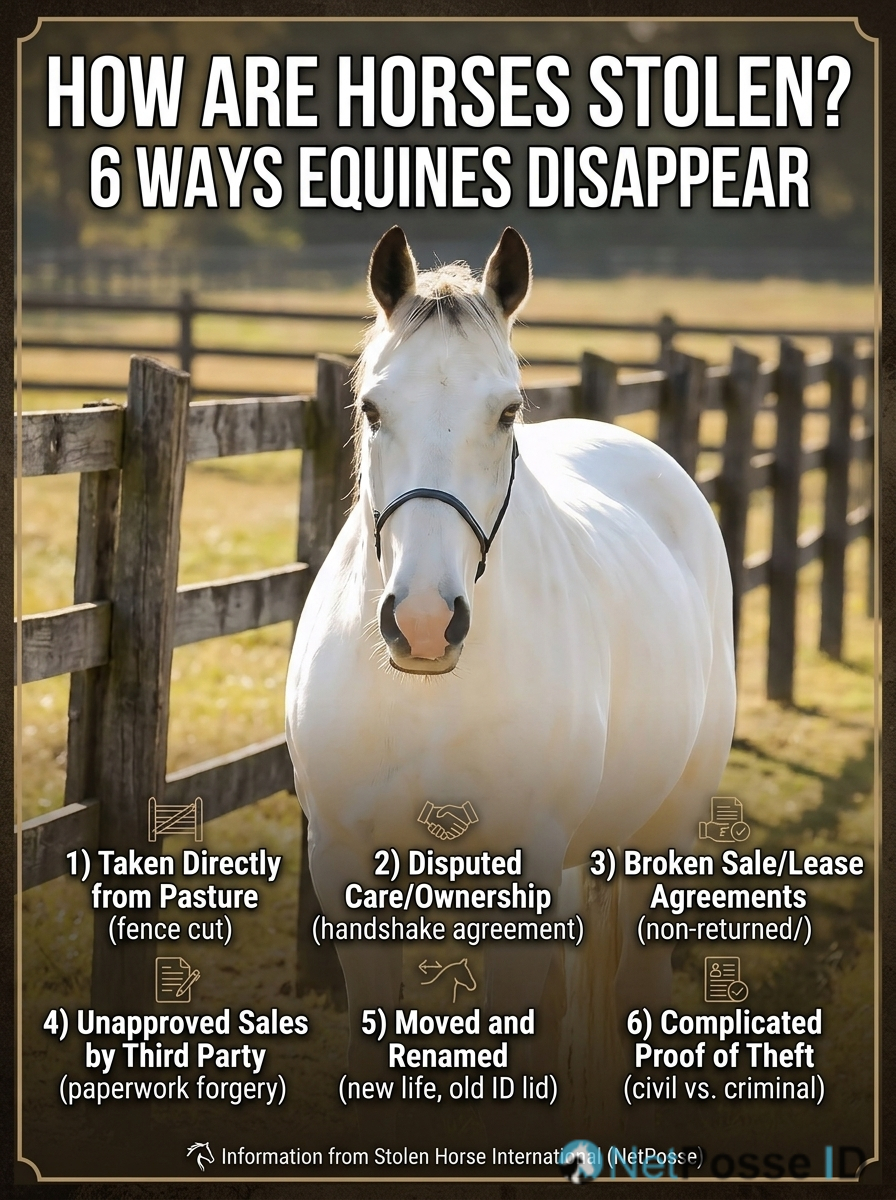
1. Vanishing from Pastures
Horses can disappear right from their home ground. An owner might arrive at morning feeding to find an open gate or a downed fence. While not every missing horse is stolen—some simply escape—assuming the animal just wandered off can waste critical time. Immediate investigation is vital to determine what happened.
2. Theft by Trusted Individuals
One of the most devastating scenarios involves someone the owner knows and trusts. Trainers, friends, transporters, or boarding stable operators may move a horse without permission, stop answering phone calls, or refuse to return the animal. These cases frequently involve disputes over contracts or payments, making it difficult to determine where civil disagreements end and criminal acts begin.
3. Broken Sale or Lease Agreements
Horse transactions rely heavily on trust. Owners frequently allow prospective buyers to take a horse on a trial period or enter into long-term lease agreements. When those terms are broken, the horse might be moved, sold to a third party without authorization, or hidden, leaving the true owner with incomplete paperwork and a complex legal battle.
4. Unauthorized Sales
An owner may discover their horse was sold or given away without their permission. By the time the theft is discovered, the horse may have changed hands multiple times. The current caretaker often has no idea an ownership dispute exists, believing they purchased the animal legally.
5. Hiding in Plain Sight
A horse does not need to be locked in a dark barn to be hidden. Because horses lack license plates, a missing animal can stand in a nearby pasture completely unnoticed. Thieves can easily change a horse's name, alter its appearance by cutting its mane, or transport it across state lines. Without permanent identification, matching a wandering or sold horse to its rightful owner is incredibly difficult.
6. The "Civil Matter" Obstacle
Proving a theft occurred is often the hardest part of recovery. When ownership records are incomplete or agreements are strictly verbal, law enforcement may classify the situation as a civil matter rather than a criminal offense. Without clear evidence, authorities cannot easily intervene, leaving the owner to navigate the legal system alone.
"But My Horse Avoids Strangers"
Many owners believe their horse would never load into a stranger's trailer. They are often right. However, the individual taking the horse is rarely a stranger. The animal usually recognizes the handler, or the person was already given legal possession of the horse before cut ties or contract breaches occurred. The issue is less about how someone physically managed to take the horse, and more about how they gained access to it in the first place.
How to Protect Your Horse
No precaution eliminates risk entirely, but specific steps drastically improve the chances of protecting and recovering your horse:
• Keep current photographs: Take clear, updated pictures of both sides of the horse, its face, and any unique markings, scars, or brands.
• Maintain proof of ownership: Keep bills of sale, registration papers, and veterinary records in a secure, organized place.
• Use permanent identification: Speak with a veterinarian about microchipping and ensure your contact details are registered securely.
• Put everything in writing: Never rely on verbal agreements for sales, leases, trials, or training. Clearly outline terms, termination conditions, and the exact rules of care in a signed contract.
Stolen Horse International provides news and other resources for free on this website. As a charitable organization we survive on the kindness of people like you. Please consider donating to help fund the organization or purchasing a NetPosse ID for your horse, dog or cat to help protect your beloved animals!
Debi Metcalfe