

Stolen Horse International (also known as NetPosse) is a unique non-profit organization dedicated to aiding horse owners in the recovery and protection of stolen, missing, or lost horses. Founded in 1997 following a personal crisis experienced by its founders, its evolution—from an ad hoc internet alert to a comprehensive equine protection network—reflects significant advancements in digital communication and community outreach within the equine industry.
1. Background and Origin
In September 1997, an event that would later define an entire movement occurred when Harold Metcalfe’s mare, Idaho, was stolen. Devastated but determined, Debi Metcalfe, with Harold’s support, initiated what would soon become Stolen Horse International. Originally conceived as an internet-based alert system—the first of its kind—the effort rapidly evolved to become a structured organization dedicated to the recovery of stolen horses and other equine-related property.
Key points from the founding include:
• The theft of Idaho marked the organization’s origin, creating a personal and community-driven impetus for change. [2]
• The online alert, which was a pioneering effort in using the internet for equine recovery, established the foundation for what would later be known as NetPosse or Stolen Horse International. [1][3]
2. Evolution and Growth
Early Development (1997–Early 2000s)
- Inception from Crisis: The immediate response to Idaho’s theft demonstrated how digital communication could be harnessed to address urgent problems in the equine community. The rapid spread of alerts and recovery tips soon encouraged horse owners nationwide to engage in similar actions.
- Organizational Formation: With increasing media coverage and word of mouth, what began as a simple alert service matured into a formal non-profit. By 2003, Stolen Horse International was established as a registered 501(c)(3) organization, solidifying its role beyond an ad hoc community effort.
Digital Innovation and Outreach
- Web Presence and Tools: The establishment of the NetPosse.com website was a critical turning point. Repeatedly revised over the years to enhance functionality—with fully mobile access and advanced search capabilities—the website now houses over 5,000 searchable horse reports.
- Notably, SHI became one of the first organizations to promote microchipping for horses, even introducing the concept of a VIN (Vehicle Identification Number) equivalent for equine identification. [8][9]
- Volunteer-Driven Growth: Operating entirely with volunteers, SHI has leveraged community goodwill and the passion of horse enthusiasts to extend its reach. With no paid employees, the hundreds of volunteer hours dedicated each week underscore its grassroots and community-driven nature.
3. Core Activities and Programs
Stolen Horse International’s operations span several key areas:
Recovery of Stolen and Missing Horses
- Alert System: The organization remains committed to sending out immediate alerts when a horse is reported stolen, capitalizing on its extensive online network to disseminate information rapidly.
- Coordination with Law Enforcement: SHI works closely with police and other authorities, contributing intelligence that has led to the apprehension of horse thieves and the recovery of countless animals. [9]
Protection of Equipment and Tack
- Beyond Live Horses: Recognizing that theft extends to equipment, trailers, and tack, SHI offers assistance in identifying and recovering stolen gear. Identification methods (such as engraving and registration programs) are promoted to make such items less attractive to thieves. [6]
Missing Owners and Civil Theft Cases
- Lost Owner Recovery: The network also assists in reuniting horses with owners who may not even be aware of their animal’s whereabouts—a task that becomes crucial during natural disasters or cases of civil theft such as contentious leases or family disputes. [7][8]
Educational Outreach and Community Engagement
- Seminars and Publications: Through news posts, educational articles, and participation in equine events, SHI has created an information resource for the industry. Regular updates, case studies, and even testimonials (such as the powerful legacy of Idaho) form an essential part of their outreach.
- Victim’s Services Program: Charging minimal fees for in-depth recovery reports, SHI channels funds to further support its services while still offering free reports in situations such as found animals or during crises.
4. Impact on the Equine Community
Case Studies and Personal Stories
- Legacy of Idaho: Idaho’s remarkable story—from her theft in 1997 to eventual recovery and decades of service—has become the symbol of resilience that inspires countless equine protection efforts. Detailed narratives highlight how personal experiences have spurred broader community action. [From multiple NetPosse news posts]
- Thousands Served: Over the years, SHI has assisted more than 6,000 victims and countless horse owners, suggesting that its model of volunteer-driven, digitally coordinated recovery is both effective and deeply needed.
Industry Innovation
- Microchip Integration: Being at the forefront of equine identification, SHI’s early adoption of microchip technology has influenced broader industry practices, promoting standards that have helped deter theft.
- Digital Networking: The evolution of SHI’s digital platform has not only kept pace with social media advancements but has also set a benchmark for how niche community networks can harness technology to solve real-world problems.
5. Challenges and Notability
Despite its extensive contributions, Stolen Horse International has navigated several challenges:
- Perceived Notability: Early on, Wikipedia editors and others questioned the organization’s notability due to its grassroots origins. Continuous efforts to cite reliable secondary sources, news articles, and documented case successes have since helped to solidify its reputation.
- Resource Constraints: Operating on donations, fundraisers, and volunteer labor means that financial and operational resources are limited. Nonetheless, the organization’s continued impact is a testament to its efficiency and community support.
- Adaptation to Changing Technology: As social media and digital tools have evolved, SHI has had to update its platforms multiple times. Successful adaptations, however, have ensured that the network remains robust and user-friendly.
6. Conclusion
From its spontaneous inception following the theft of a beloved horse to becoming a cornerstone for equine recovery and protection, Stolen Horse International’s journey reflects the power of community and innovation. Its evolution underscores how personal adversity can stimulate systemic change, leading to the creation of a network that not only recovers stolen horses but also protects equipment, educates the industry, and continuously adapts to the digital age. As the organization moves forward, its legacy—embodied in the story of Idaho and the countless horse owners it has helped—remains a powerful reminder of the impact of collective vigilance and volunteerism.
With over two decades of dedicated service, Stolen Horse International continues to adapt, expand, and protect. Its journey from a single stolen mare to a vast digital and volunteer network stands as an inspirational model for problem-solving in niche communities.
References
“What is Stolen Horse International, Inc?” archived from netposse.com. Retrieved from Wikipedia.
“Who is Debi Metcalfe?” archived from netposse.com. Retrieved from Wikipedia.
Kirby, A. C. (2006). “The Power of One Horse”, Gaited Horse Magazine.
“What If Your Horse is Stolen?” Simply Marvelous Horse World (blog).
“Horse Heist! Preventing Horse Theft”, Horsewyse Magazine.
“Identifying stolen tack”, Jessica Jahiel's Horse Sense.
Church, S. L. (2006). “Found Horses—Missing Owners”, thehorse.com.
“Hurricanes Katrina, Rita Equine Relief Information”, Equisearch.
“Stolen Horse International Announces Court Victories”, thehorse.com (Press Release).
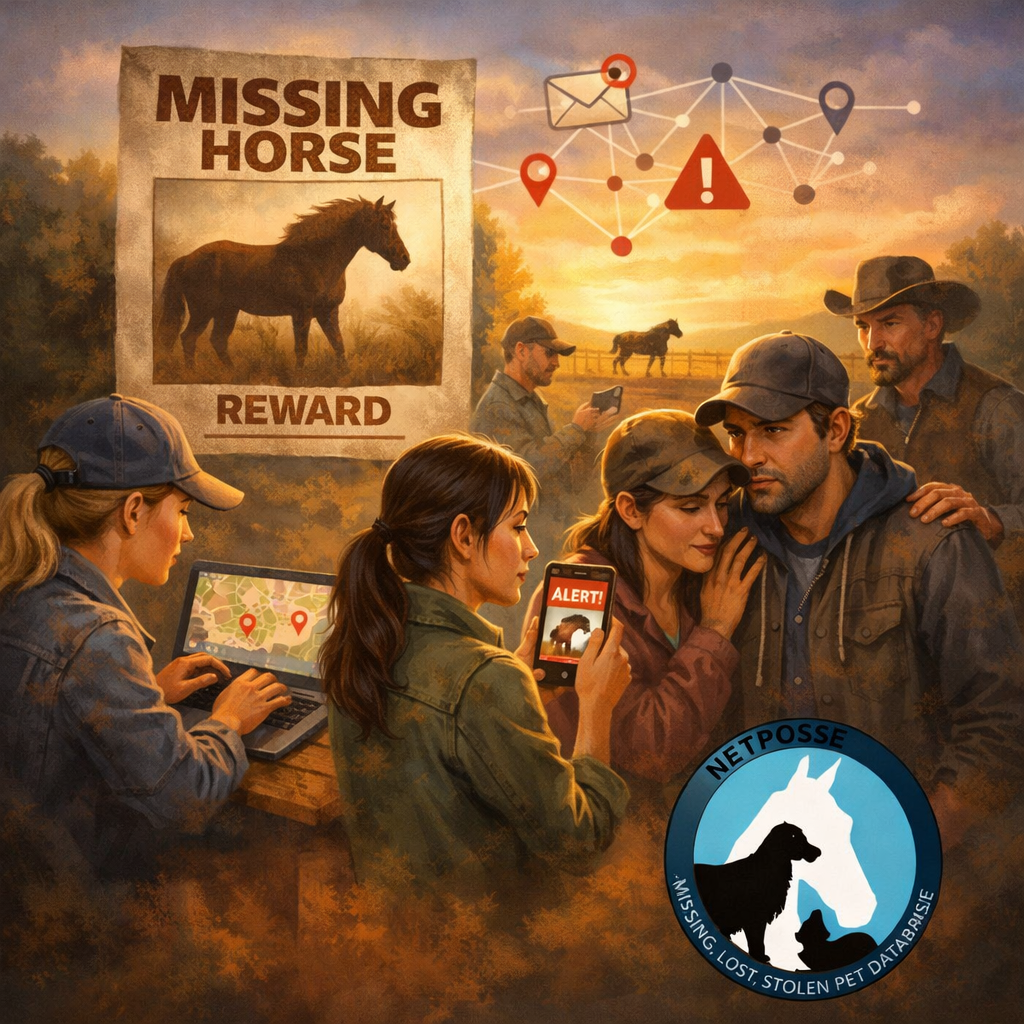
Stolen Horse International provides news and other resources for free on this website. As a charitable organization we survive on the kindness of people like you. Please consider donating to help fund the organization or purchasing a NetPosse ID for your horse, dog or cat to help protect your beloved animals!
Debi Metcalfe