

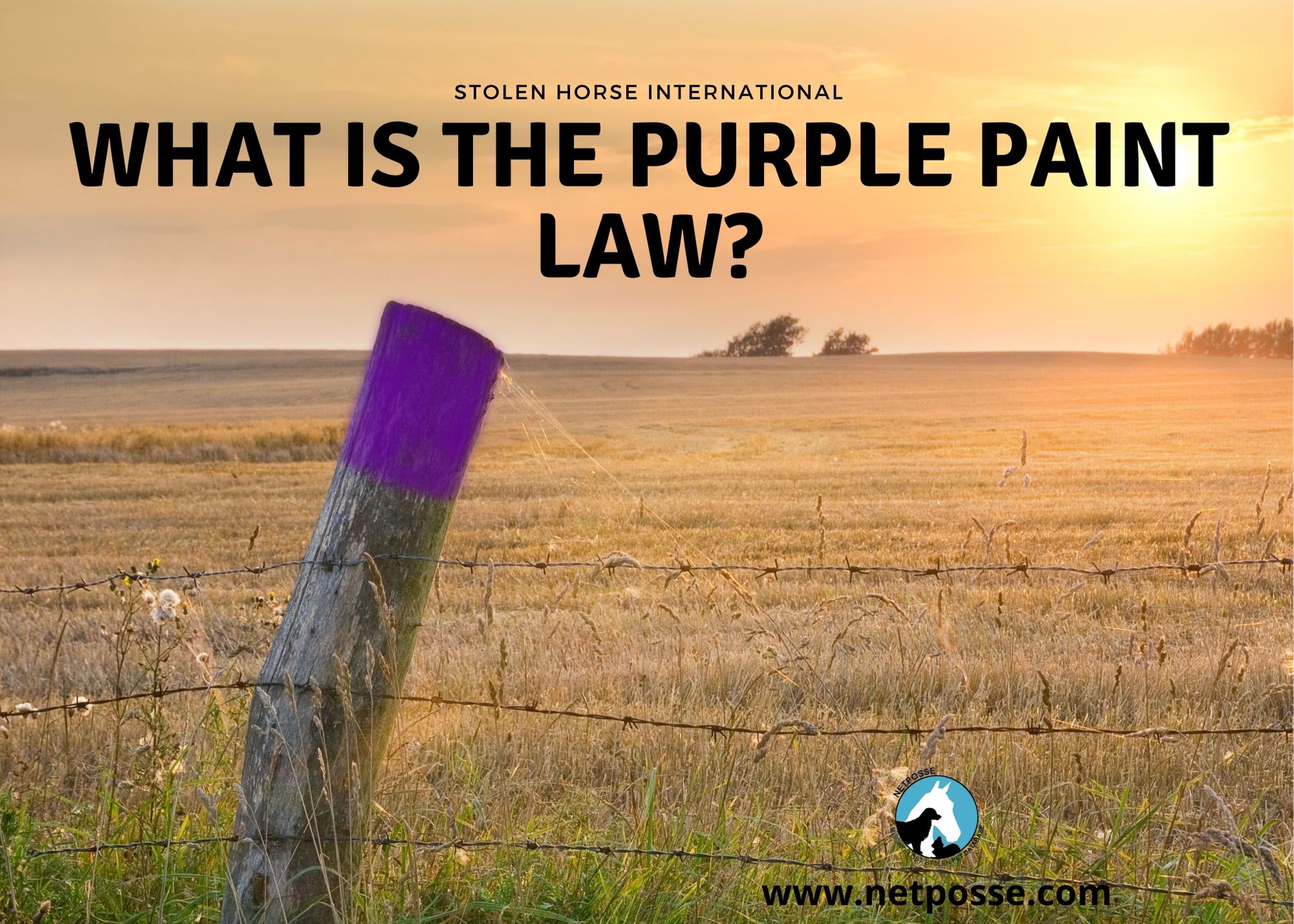
Why Purple Paint on Trees and Fence Posts Matters: A Legal “No Trespassing” Notice
Did you know that landowners in North Carolina—and many other states—may use signs, purple paint marks, or both to post their properties against trespassing?
Have you ever been traveling through the countryside and noticed bright purple paint on trees or fence posts?
I recently saw several fence posts along a rural North Carolina road painted purple and wondered what it meant. Curious, I looked it up—and discovered something many people still don’t know.
Property owners often struggle to keep “No Trespassing” signs in place. Signs can be stolen, damaged by weather, or vandalized. Purple paint marks provide a durable, low-maintenance, and cost-effective way to clearly communicate that land is posted and private.
North Carolina is one of several states that recognize the “purple paint law.” In these states, purple paint marks serve as a legally recognized no-trespassing notice, particularly in relation to hunting, fishing, or trapping. When you see purple paint, it means you are on private property and do not have permission to enter.
That said, traditional “No Trespassing” signs are still useful in North Carolina, especially for purposes not specifically addressed under the purple paint statute.
While many states have adopted similar laws, there are variations. For example, in Texas, purple paint carries the full legal weight of a posted “No Trespassing” sign. In Montana, the designated paint color is orange instead of purple. Always check your state’s specific regulations.
Are There Rules for Applying Purple Paint?
Yes—there are clear standards.
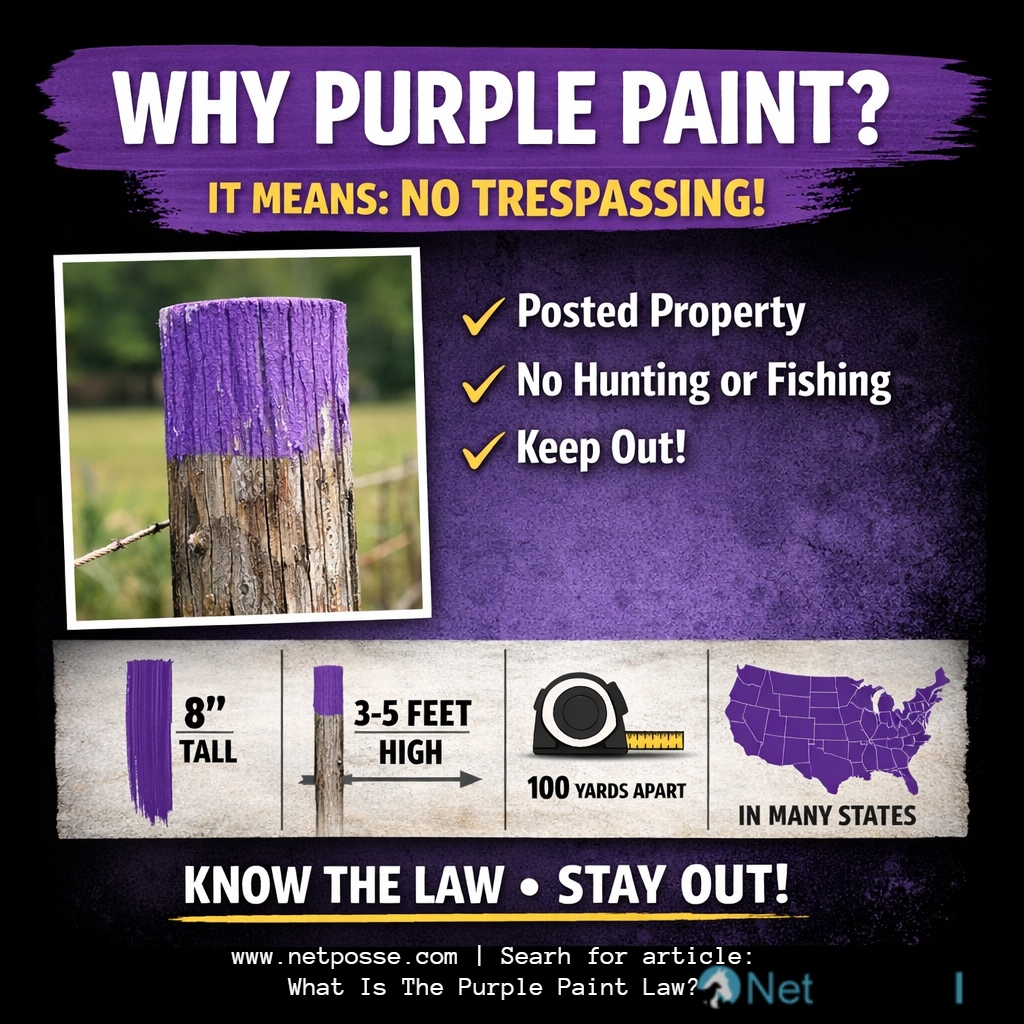
North Carolina General Statute §14-159.7 allows a landowner or lessee to place identifying purple paint marks on trees or posts around the area to be posted. The law specifies:
Each paint mark must be a vertical line at least eight inches long
The bottom of the mark must be no lower than three feet and no higher than five feet from the base of the tree or post
Marks must be placed no more than 100 yards apart
Marks must be readily visible to anyone approaching the property
To prohibit fishing or the taking of fish, paint marks only need to be placed along the shoreline or stream bank at intervals of no more than 100 yards.
So if you see purple paint on trees, fence posts, or boundary markers, you now know exactly what it means: Private Property. No Trespassing.
It’s a simple system that protects landowners and helps prevent accidental trespass.
And yes—if you own rural property, it might be time to pick up some purple paint.
Many other states currently recognize purple paint (or similar color) posting laws. Because details vary by state and may change, always check your local statutes or wildlife agency guidance before relying on paint alone.
- Alabama
- Arkansas
- Arizona
- Florida
- Idaho
- Illinois
- Indiana
- Kansas
- Maine
- Missouri
- Montana
- North Carolina
- Pennsylvania
- South Carolina
- Tennessee
- Texas
Laws about purple paint and property posting vary by state and can change. This information is for general education only. Always check your state’s current laws or consult a legal professional before relying on paint markings or entering private property.
What Purple Paint Means to You
When you see purple paint on a post, tree, or fence in North Carolina:
➡ You are likely at the boundary of private property.
➡ The property has been legally posted under state statute.
➡ Hunting, fishing, trapping, or unauthorized entry are prohibited unless you have the owner’s permission.
Stolen Horse International provides news and other resources for free on this website. As a charitable organization we survive on the kindness of people like you. Please consider donating to help fund the organization or purchasing a NetPosse ID for your horse, dog or cat to help protect your beloved animals!
Debi Metcalfe