Freeze Mark Identification Information
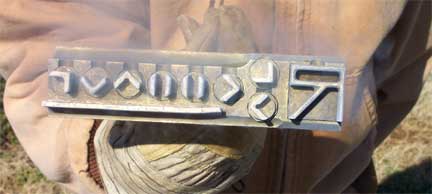
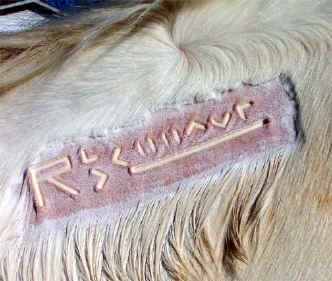
The technique is simple and completely painless to the animal. The left side of the neck is shaved and washed with alcohol, and the mark is applied with an iron that is chilled in liquid nitrogen. The hair at the site of the mark will grow back white and show the identification number.
Although every effort is made to apply freezemarks that are legible, occasionally freezemarks do get blurred. This happens when the animal moves as the iron is applied, resulting in all or some of the identification numbers becoming illegible.
Kyro Kinetics
During the 1970s, information was gathered and studied by Washington State University, the United States Department of Agriculture, The Arabian Horse Registry, and an agent in charge of the Colorado Bureau of Investigation, to research the pros and cons of livestock identification methods.
In 1980 their research was published in an article titled "Freeze Marking and Other Techniques for Identifying Horses" in the Journal of Forensic Science. Dr. Keith Farrell of Washington State University and his wife Pat developed the Alpha-Angle Freeze Mark and horse identification system that has gained recognition internationally. Many top breed associations and the Bureau of Land Management highly support this method of identification.
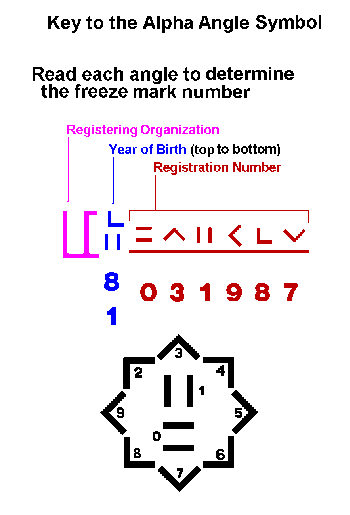
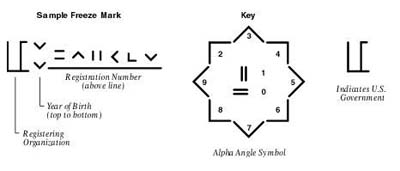
Each letter of the alphabet was developed to be unalterable, where it could not be changed from one letter to another, such as a P to an R. Each Alpha symbol could be rotated into one of eight positions.
BLM Freezemark
The BLM uses freezemarking to identify captured wild horses and burros. Freezemarking is a permanent, unalterable, and painless way to identify each horse individually. It is applied on the left side of the neck. It follows the International Alpha Angle System, which uses a series of angles and alpha symbols that cannot be altered. The mark contains the Registering Organization (U.S. Government), year of birth, and registration number.
In addition to the freezemark on the left side of the neck, wild horses in long-term pastures are marked on the left croup with four-inch high Arabic numerals that correspond with the last four digits of the freezemark on the neck.
The graph at the right illustrates how to read a BLM freezemark. If a mark is difficult to read, we recommend shaving the left side of the neck. You must know the freezemark of your horse or burro before making an inquiry to a BLM office about the animal.
Standardbred Brand Identification
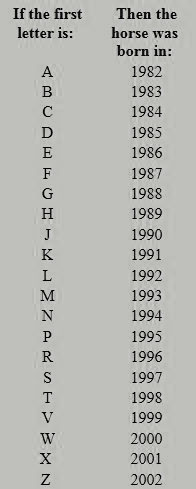
There are some resources that you can explore to find out more about your Standardbred horse brands. There are always five characters in the tattoo (either a letter and four numbers or two letters and three numbers). The first letter indicates the year of birth.
To help further your research on a possible Standardbred freezemark, try going to the Standardbred Fan Club Forum message board. You may find someone there wh can further help you with your search.
The Standardbred Stockyard message board may be of some help in your search to find the owner of a horse. Click here
Another resource for researching a mark on the neck of a horse is the Trotting Horse Association. Click here for help with a name or tattoo search.
Outside of the USA
The Standardbred and Performance Horse Markings in Australia and New Zealand - Click here for more information
The Standardbred is identified by a distinctive brand on the upper right side of the neck. The brand is a series of symbols unique to the horse. The brand can be used to find the racing name, age, racing history, and pedigree.